
person_outline
News
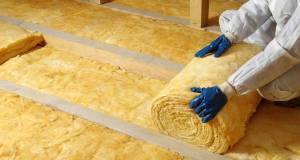
Widespread insulation failures found in EU tests
One in three insulation products evaluated in a Europe-wide market surveillance campaign failed to meet thermal resistance requirements – with one in seven failing to meet their fire class.

Kingspan fined €40 million by EU
Kingspan has been fined by EU regulators for providing incorrect and misleading information relating to the acquisition of another company.
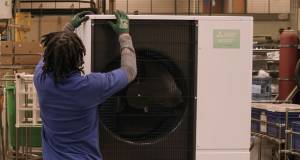
Households feeling the heat of global oil conflict
Residential heat pump sales have risen this year, with an eleven per cent rise in the first six months of the year against the same period in 2025.
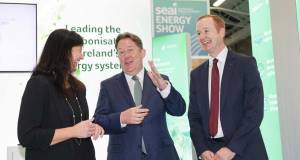
New and enhanced Irish retrofit grants go live on 6 October
The Irish government has announced a range of new retrofit grant measures targeted at households exposed to high energy costs – and increased grants for switching to heat pumps. The new grants will be available from 6 October, contrary to media reports that they would apply from January.
Campaigners tell Irish government to publish Climate Action Plan
Stop Climate Chaos publicly pressed Minister for Climate Darragh O'Brien to publish the 2026 Climate Action Plan, which remains unreleased despite the year being nearly over, with a rally at the Dáil on Wednesday 16 September.
Central Bank: Irish housing completions set to fall as housing crisis continues
The Central Bank of Ireland has revised down its forecast for new home completions, cutting its 2026 projection from 40,000 to 39,500, with 1,000 fewer completions also expected in each of 2027 and 2028, now put at 41,000 and 45,000 respectively.
Straw houses could help meet housing targets and cut emissions
A new study suggests the biggest barriers to greener construction are not material scarcity but systems and policy.
Price regulation promised to address district heating affordability
The Government has approved revisions to the general scheme of the Heat (Networks and Miscellaneous Provisions) Bill 2024, clearing the way for a regulatory framework intended to accelerate the rollout of district and communal heating in Ireland, with price regulation promised for all heat network customers.

Housing minister calls for faster retrofit to shield homes from energy shocks
Ireland must treat building decarbonisation as critical national infrastructure to protect households from future energy price shocks, according to a new policy scorecard launched recently.
Free solar for energy-poor homes under reported €200m government plan
Solar PV could be rolled out as standard under the Warmer Homes scheme, alongside a suite of enhanced retrofit grants for low-income households, landlords and businesses, under proposals reportedly being prepared for cabinet.
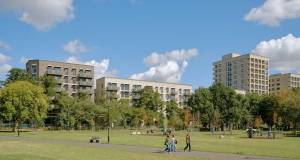
Study: passive house costs as low as 2%
The myth that energy-efficient building is a needless luxury has been dealt a significant blow by new research published by the UK’s Passivhaus Trust.
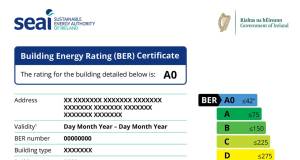
New BER takes effect while ZEB details remain unclear
Ireland's Building Energy Rating system has moved to a simplified eight band scale, with a new A0 rating at the top reserved for zero emission buildings (ZEBs).
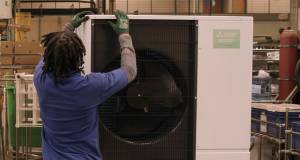
EU Electrification Action Plan to accelerate heat pump transition
The EU is set to publish plans to reform how electricity and gas are priced – to drive the widespread uptake of heat pumps and cut heating bills by up to 60 per cent.

Planning reform will thwart low energy housing, councils say
Britain is failing to address housing as part of the climate emergency, according to a group of 60 local authorities, businesses and civil society groups who say government changes to planning rules could spell the end of zero carbon homes in England.
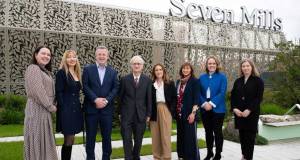
Cairn secures passive house certification for three Dublin developments
Major new passive house schemes for Ireland.
UK net zero carbon standard accepts passive house as compliance route
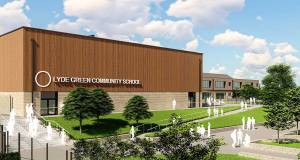
Passive house certification has been formally recognised as a deemed-to-satisfy route within the UK Net Zero Carbon Buildings Standard at practical completion, in a move which recognises the reliability of the passive house standard as a way delivering significant real world carbon savings.
Women make up just 11 per cent of Ireland's construction workforce, says CIF
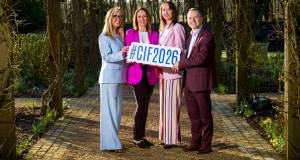
Just 11 per cent of the 191,000 people working in Ireland's construction sector are women, according to the Construction Industry Federation, which says greater female participation is essential to meeting the country's housing, infrastructure and climate targets.
Certification offers builders green development loans
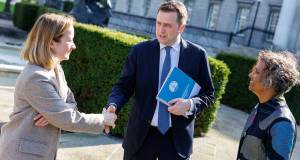
The Irish Green Building Council (IGBC) has launched Home Performance Pathway, a new certification for small home builders to deliver high quality, healthy and environmentally sustainable homes.

Ireland yet to set zero-emission building timeline
The Department of Housing, Local Government and Heritage has confirmed that work on transposing the revised Energy Performance of Buildings Directive into Irish law is continuing, but has not yet stated a timeline for aligning Part L of the building regulations with the directive's zero-emission building standard.
AECB seeks executive director to lead green building push
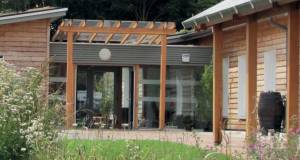
The Association for Environment Conscious Building (AECB) is recruiting an executive director in what the organisation describes as a rare opportunity to shape the future of sustainable construction in the UK
Air tightness training course to launch in Carlow this March
Irish energy consultancy 2eva is set to run a two-day professional training course for air tightness testers this spring, aimed at both newcomers to the discipline and experienced practitioners looking to formalise their skills, as well as timed to meet what the company sees as growing demand for qualified testers in Ireland.

#BuildingLife Series: Director at CORA Consulting Engineers, John Casey
In each edition, Passive Plus Plus profiles leaders in construction and architecture who have endorsed the Irish Green Building Council’s call to address the environmental impacts of buildings across their entire lifecycle.

Green homes and finance join forces for growth
Certified green homes are becoming mainstream across Europe – boosted by collaboration from experts in green building and finance. Smarter Finance for EU (Smarter4EU), a pan-European initiative dedicated to the creation of a mainstream European green housing market, announced a range of new initiatives at the “Banking on Green Homes" event in Madrid, on 28 May.
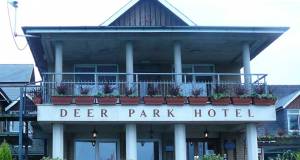
Hotel demolition judicial review could set embodied carbon precedent
A Fingal county councillor has been granted leave to pursue a judicial review of the planning board's decision to allow demolition of the Deer Park Hotel on Howth Demesne.
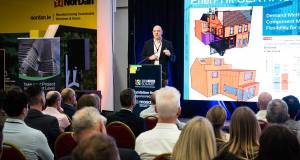
ZEB Summit celebrates Irish passive progress
The rapid rise in the uptake of the passive house standard in Ireland in recent years was centre stage at ZEB Summit 2025 – with international visitors taken aback by Ireland’s progress.
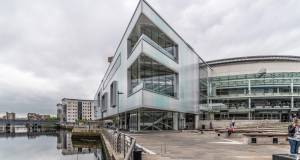
Irish and British associations unite for conference as passive house explodes
The 2025 UK and Ireland Passivhaus Conference, themed Climate Emergency: The Passivhaus Solution, is set to bring together hundreds of sustainable building professionals in Belfast this October.

IGBC launches case studies to drive nature-led construction
The Irish Green Building Council (IGBC) will unveil a groundbreaking collection of Irish case studies showcasing best practices for integrating biodiversity into building projects and infrastructure development.

Circular roadmap aims to reduce waste and create new markets
Ireland now has a roadmap aimed at transforming the construction industry from a linear to a circular economic model by 2040.
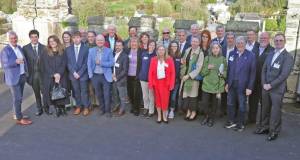
Enniscorthy to host ‘make or break’ sustainable building summit
As global temperatures soar, an Irish organisation is bringing experts together this month for a summit on the future of sustainable construction.
Banks turn to green housing courses as EU sustainability rules bite
Help is at hand for European financial institutions scrambling to train staff in sustainable housing finance as regulatory pressure intensifies and customer demand for green mortgages accelerates across the continent.

Ecocem executive John Reddy becomes the first Irish President of the Institute of Concrete Technology
Reddy is the first person from Ireland to hold the role of President of ICT, which has a term of two years, and follows his term of Vice President of the organisation since 2023.

#BuildingLife Series: RIAI CEO, Kathryn Meghen
In the #BuildingLife Ambassador Spotlight Series, Passive House Plus is profiling leaders who have endorsed the Irish Green Building Council’s call to address the environmental impacts of buildings across their lifecycle.
Marketplace
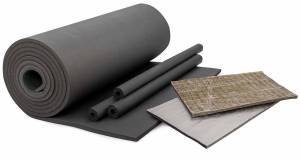
Armacell quantifies emissions avoided by insulation
Armacell has published figures estimating how much greenhouse gas emissions its insulation products help avoid over their lifetimes.
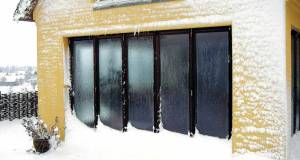
Lacuna: thermal modification boosts timber utility
Thermally modified timber has been used in the building industry for years, principally as a durable and sustainable cladding material, but its history stretches back millennia.
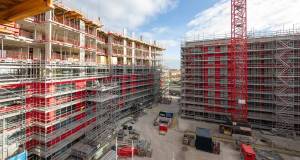
Proctor membrane used on landmark Dublin passive scheme
Proctor Group’s Wraptite airtight membrane has been used on one of the largest passive house projects in Ireland, with the self-adhering membrane forming part of the external wall build-up at Cairn Homes’ Pipers Square development in Charlestown, Dublin.
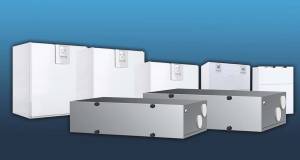
Airflow Adroit MVHR range wins Build It award
A passive house certified mechanical ventilation system with has been named best home technology product or installation at the 2025 Build It Awards.
Building or upgrading?
If you’re pricing, designing or constructing a building – whether it's an energy upgrade of a small house or a sustainable new build home, office or multi unit scheme – Passive House Plus can help.
Click here to get in contact with the companies you need, and receive a copy of Passive House Plus for free!


How deep is too deep for cost-optimal retrofit?
Decarbonising homes at scale demands pragmatic sequencing, not doctrinal purity. Lloyd Alter reconsiders the retrofit strategy he once vigorously opposed – while mounting a defence of deep fabric retrofit, with caveats.
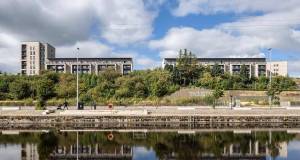
Glasgow scheme creates affordable rents fit for the future
If attempting to tackle a housing crisis is hard, how about doing so while taking on the climate crisis, energy crisis, cost-of-living crisis and pandemic all at once, with a sprinkle of Brexit? One pioneering Scottish project shows that with a little resolve, adversity can lead to triumph.
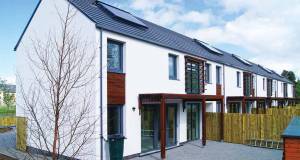
Dungannon social housing sets passive example
The first ever feature in Passive House Plus, a then new five house terrace in Dungannon, Co Tyrone that could make a proud boast: it was the first certified passive social housing development on the island of Ireland.

Cambridge retrofit is a study in considered retrofit
How can period properties be made fit for the demands of the 21st century, without pushing the building too far? One University of Cambridge retrofit project may have the answer, harnessing multidisciplinary expertise to balance energy, moisture and space constraints. Additional reporting by Jeff Colley.
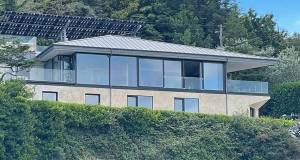
A1 rated passive house tackles embodied carbon on challenging site
Contrary to popular belief, passive house isn’t about maximisation of passive solar gains. It’s about optimisation, balancing free winter heat with avoiding summer overheating. But on a site that seemed hellbent on denying sunlight, every last ray has been stolen to somehow deliver not just a passive house, but a net zero energy home.Additional reporting: Jeff Colley
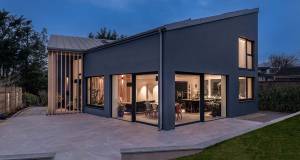
Infill proves a 'bubble of pleasantness' for Cork family
An Edinburgh-steeped couple wanted Georgian grandeur in a Cork city infill. Their architect obliged, wrapping double-height spaces and oversized glazing in a climate-responsive envelope that shrugs off Irish winters. Additional reporting: Jeff Colley

Cypren Edmunds: “I would outlaw siloed thinking”
In the first instalment of a new feature where we try to get into the heads of prominent people in green building, we asked the president of the European Straw Building Association to peer into the void, peer into his record collection, and peer into the future.
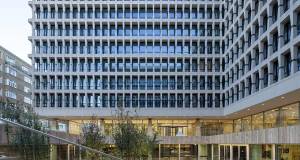
Modernist masterpiece gets near passive update
Gordon Bunshaft's Banque Lambert has presided over Boulevard Marnix since 1964, a listed modernist landmark facing the King's Palace, its celebrated precast concrete exoskeleton as distinctive today as the day it was built.

A warts-and-all account of a landmark passive house conference
World-renowned green building writer Lloyd Alter spills the beans on the first ever combined UK and Ireland passive house conference in Belfast.
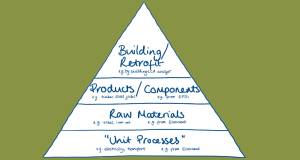
Life cycle assessment in construction and retrofit
Life cycle assessments are crucial for sustainable building design, but understanding their inherent limitations is key to making better decisions with imperfect data, writes Dr Lois Hurst.
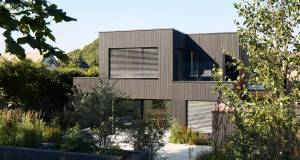
Bio-based self-build fuses passive principles and clever shading proves heatwave-proof
Made to look easy on TV, Duncan and Anaya decided to give selfbuilding a go and somehow created the most comfortable house they’ve ever lived in – even in the face of extreme heat events.

Accessible Manchester retrofit delivers comfort and low bills
An award-winning retrofit demonstrates that universal design and ultra-low energy performance are powerful allies, not competing priorities.
Blogs
From councils to caretakers: the comfort custody battle
As summers get hotter and air conditioning becomes more common, the question is no longer just how well buildings perform in a heatwave — it is how people will actually use them. Dr Huda Elsherif, building physics engineer at Scotch Partners, explores the hidden politics of thermal comfort.
In 2099, it never rains, but it pours
The familiar North Atlantic drizzle may be giving way to more forceful, building-battering rain. A new study warns of shifting patterns that will test the resilience of structures, writes Toby Cambray.
Retrofit redux: Catching up with A3
The upgrade of Ireland's retrofit target to A3 marks a critical step forward, bridging the gap between energy modelling and real-world performance, explains Dr. Marc Ó Riain.
Energy poverty and electric heating
As electricity decarbonises, the case for switching from fossil fuel boilers to efficient use of electricity to heat buildings via heat pumps has become overwhelming. But in markets like the UK where electricity is far more expensive than the European average, and people on low incomes may be chronically underheating poorly insulated homes, could a drive to electrify heating exacerbate energy poverty?
Three books and a taxi ride
Peter Rickaby looks back on an extraordinary career, the challenge of convincing people of the need for a new approach to buildings, and the people who helped him to do just that.
The transformative power of industrialised retrofit
The retrofit market is messy, scuppered by knowledge and skills gaps, and inconsistent approaches. Ele George makes the case for industrialisation to level up the retrofit market.
Tripling EU / UK Energy Efficiency Policy: the NZEB
One of Europe’s key climate breakthroughs came in the form of the EU’s nearly zero energy building target, as Dr. Marc Ó Riain explains in the latest part of his series on the history of low energy building.
Passive house doesn't care about materials
One stubborn trope in some corners of green building is that passive house is so focused on energy performance that its advocates ignoring materials. Not so, argues Toby Cambray.
We need to talk about women and retrofit
Our efforts to retrofit homes across the UK and Ireland will be severely hampered unless we engage meaningfully with and empower women homeowners and professionals, writes Ellora Coupe, founder of Her Retrofit Space.
Energising Efficiency
In the latest piece in his series on the development of low energy building, Dr Marc Ó Riain describes the evolution and Impact of EPCs in Ireland and the UK.
If passive house is Everest, we’ve left base camp
The construction industry is moving in great numbers towards the passive house standard. In an adapted version of a speech at the Construction Industry Federation Conference in September, Passive House Association of Ireland chair Caroline Ashe Brady looks at the trek ahead.
In defense of fabric
As the grid gets greener and the case for heat pumps as a decarbonisation silver bullet becomes increasingly compelling, questions are starting to be asked about how far we need to go with retrofitting building fabric – or whether we need improve fabric at all. We ignore fabric at our peril, warns Toby Cambray.
Out of the blue - a passive revolution
Near the peak of the Celtic Tiger – at a time when developers were throwing up often sub-standard homes at a record pace, one self-build project pointed to a different approach, writes Dr Marc Ó Riain.
Buy, hold or sell
Recent analysis has suggested a slowdown in the property sector for 2024, but what impact might a drop in inflation have? Mel Reynolds runs the numbers.
An early green building in a changing Ireland
It’s fair to say that green building wasn’t a thing in early 90s Ireland, which makes one extraordinary Dublin project from 1994 all the more remarkable, as Dr. Marc O Riain writes.
Bedding sustainability into British buildings: Bioregional’s BedZed
Shortlisted for the Stirling Prize in 2003, BedZed was a prominent example of architecture starting to pay attention to sustainability. But how well did it work? In the latest part of his series on the history of low energy architecture, Dr. Marc O Riain looks back at a landmark project.
Is shared equity a bridge too far?
In the face of an affordability crisis, first time buyers of new homes are being offered a cocktail of incentives to help them get on the property ladder, including the government’s Help to Buy and First Home schemes. Mel Reynolds asks: are these the solution to the affordability crisis?
Awaab Ishak’s death shows that building physics are a life and death matter
Advances in building physics in recent years are leading to an ever-increasing understanding among experts of the risks that a litany of pollutants can pose to building occupants. But this has not stopped vulnerable people from living – and dying - in substandard buildings that exacerbate these risks. Urgent action is needed, Toby Cambray explains, to better communicate and decisively tackle the risks buildings can pose to their occupants.
Healthy Homes Ireland launches indoor environmental quality report
Healthy Homes Ireland (HHI) has published a series of recommendations for the improvement of indoor environmental quality (IEQ), including the creation of a cross-disciplinary national leadership body that will advocate for change and set goals.
Mainstreaming retrofit – a massive missed opportunity
The scale of the retrofit challenge facing the UK and Ireland will require an army of tradespeople to upgrade homes – leading many to the conclusion that a new retrofit industry needs to be built from scratch. But is a more realistic answer staring us in the face – a thriving existing industry of trusted local tradespeople, asks Dr Catrin Maby OBE.
Does nuclear have a role to play in decarbonising energy?
One zero carbon energy source has historically been vehemently opposed by environmentalists. But can nuclear power overcome the high-profile failures of its past, asks Dr. Marc O Riain, or has the technology missed the boat?
Whole life carbon of buildings: a pathway emerges
While significant progress continues to be made on reducing the carbon emissions associated with heating and powering buildings, the other part of whole life carbon calculation, embodied carbon, has proved more elusive. But that may be about to change, and quickly, as Stephen Barrett of the Irish Green Building Council (IGBC) explains.
Is it okay to retrofit heat pumps before building fabric?
How flexible can heat pumps be to handle what may be inexactly defined heating demands, asks Toby Cambray?
Mass timber consultation: have your say by 21 April to change the rules
Mass timber comes into its own in terms of decarbonising tall buildings, which tend to rely on high embodied carbon materials such as steel and reinforced concrete. But regulatory change is needed to enable mass timber to fulfil its potential, as IGBC head of policy and advocacy Marion Jammet explains.
The PH+ guides
The PH+ guide to overheating
As awareness of the urgency of the climate crisis grows, efforts to kickstart en masse deep energy efficiency interventions are gathering apace. But poorly conceived low energy building efforts can lead to unintended consequences including overheating – a risk that’s bound to grow as the world warms up. Phi Architecture co-founder Claire Jamieson details the risks and offers some solutions on how to create low energy buildings that are comfortable in summer and winter.

The PH+ guide to greener concrete - reducing the climate impact of cement and concrete in buildings
Cement is responsible for up to 8% of global carbon emissions, and in this guide, sustainable design expert Jay Stuart looks at ways to minimise its environmental impact through good design, and at some of the alternative, lower carbon cement and concrete products on the market.
Timber frame & mass timber: the Passive House Plus guide to structural timber construction
Fuelled by the need to build quickly and to increasingly tight sustainability standards, the market for timber frame and mass timber construction is growing rapidly. This detailed guide covers many of the main established and emerging techniques, and looks at key issues to address if you’re considering a timber-based build.
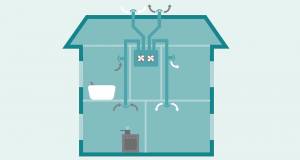
The PH+ guide to heat recovery ventilation
Heat recovery ventilation is an invaluable way to maintain indoor air quality in low energy buildings and minimise the loss of precious heat, but there are several issues to address to ensure optimal performance. Ventilation expert Ian Mawditt, a technical advisor on Part F of England’s building regulations, has decades of experience in field investigations of indoor air quality and ventilation effectiveness. His guide, which focuses on centralised or ducted whole house heat recovery systems, is essential reading to anyone considering such a system.