

- Renewable Energy
- Posted
EU Electrification Action Plan to accelerate heat pump transition
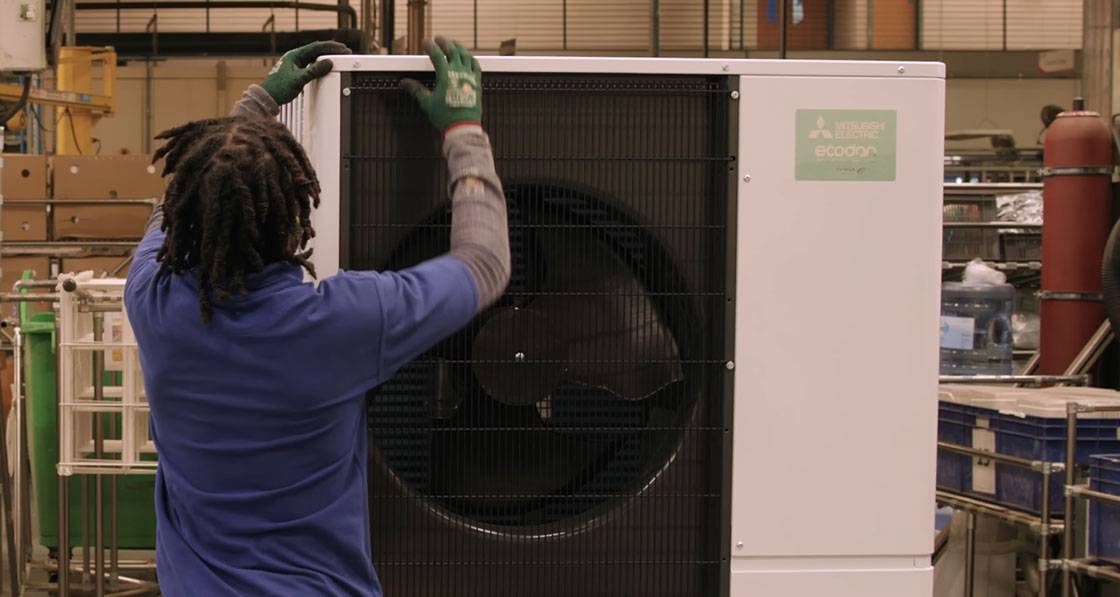
The EU is set to publish plans to reform how electricity and gas are priced – to drive the widespread uptake of heat pumps and cut heating bills by up to 60 per cent.
A draft of the proposed Electrification Action Plan obtained by Passive House Plus focuses on the electricity to gas price ratio, known colloquially as the the so-called “spark gap”. Under the proposed plan, the spark gap for consumer electricity would be limited to no more than 2.5 by 2030.
At the time of writing, data from the European Commission indicated electricity prices were approximately 2.8 times higher than gas prices in Ireland, but this ignores the additional cost of an annual standing charge that gas incurs, typically adding another €130-150/year to bills.
The shift in the spark gap would be achieved partly by mandating that electricity is taxed less heavily than fossil fuels.
This move could be key in giving consumers confidence in switching to heat pumps, by providing certainty for the medium to long term that a heat pump operating at even relatively poor efficiency levels will save money compared to a boiler.
At a spark gap of 2.5, a heat pump would only need to achieve a seasonal performance factor (SPF) of 2.25 – meaning a real world average of 2.25 kW of heat generated per kilowatt of electricity used – to achieve running cost parity with a condensing gas boiler operating at 90 per cent efficiency. Monitoring results from over 300 separate heat pump installations on UK website Heatpumpmonitor.org show every single heat pump above the 2.25 SPF threshold over the 12 months to 13 July, with the overall average coming in at SPFs of 3.99.
The commission’s main objective on heat pumps is to double the installation rate of heat pumps by 2030 compared to 2025 levels. In order to do this, the commission is proposing a price rebalancing target, capping national electricity-to-gas price ratios at a maximum of 2.5 for households and 2 for industry by 2030 to solidify the economic argument for heat pumps.
The plan proposes a number of actions to achieve these objectives.
By 2027 a clean heat market mechanism would incentivise higher heat pump sales from manufacturers, narrow the upfront cost gap against gas alternatives, and encourage installers to transition to clean heating systems.
The commission is considering making heat pump installation mandatory in public buildings through revised public procurement rules, incorporating "Made in Europe" requirements to shield European manufacturers.
To facilitate consumer transparency, the commission is proposing to launch online platforms where users can easily compare tailored, transparent installation quotes across different brands.
Consumers who struggle to bear the upfront costs of investing in heat pumps would benefit from a range of measures including subsidies, zero or low interest loans and social leasing schemes, which would allow-to-middle-income households to install heat pumps for an affordable monthly fee. This would be funded via the Social Climate Fund and ETS2 revenues to set up publicly backed, long-term leasing programs.
The EU also proposes to launch a second industrial heat auction under the Innovation Fund in 2026 to back large-scale electrified heat solutions. As Europe lurches from one heatwave to another, the plan also emphasises the role reversible heat pumps can play in terms of heating and cooling, paired with solar photovoltaics to harness sunlight when electricity demand may be spiking to provide cooling.
“With longer and more intensive heat waves, heat pumps have the additional advantage, on top of heating, of providing cooling capabilities, with a high efficiency contributing to improve EU climate resilience.” The plan states. “Shifting cooling demand from peak hours to hours with high renewable production would decrease the overall costs of the energy system while maintaining thermal comfort.”
The plan recognises the need for energy efficiency to take pressure off the grid, noting that “An efficient and decarbonised building stock would also cut peak demand, thus helping to lower costs across the wider energy system.
“Cohesion policy funds, Social Climate Fund, the Modernisation Fund and Recovery and Resilience Plans can support the electrification of buildings, such as in Belgium, where some social housing units are being equipped with a combination of solar panels and heat pumps.”
Insulation not out of mind
To deliver meaningful cost savings and other benefits for consumers, the plan emphasies that deployment of these technologies should be coordinated with building insulation and renovation, prioritising the worst-performing buildings. “Member States have an opportunity to structurally transform their building stock into zero-emission buildings, with their National Building Renovation Plans,” the plan states. “The Energy Efficiency Financing Coalition can help scale up private financing for renovations, as well as the good use of revenues generated by ETS2.”
The plan also includes key performance indicators related to district heating and cooling systems, including supplying 11 per cent of EU heat demand from waste heat recovery by 2050, district systems to supply a proposed 15 per cent of total heating and cooling by 2030, and proposed growth rates for district heating and cooling networks to grow by 6 to 7 per cent per year by 2030. Aside from heavily focusing on heat pumps, the plan places a particular focus on EVs and the electrification of industrial processes.
Related items
-
 Widespread insulation failures found in EU tests
 -
 Kingspan fined €40 million by EU
 -
 Households feeling the heat of global oil conflict
 -
 New and enhanced Irish retrofit grants go live on 6 October
 -
 Glasgow scheme creates affordable rents fit for the future
 -
 Campaigners tell Irish government to publish Climate Action Plan