Green Electricity
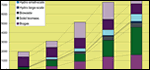
Everyone knows that the cheapest way of doing something can turn out to be very expensive in the end. The decision to make Ireland ’s electricity system so reliant on gas is about to bear this principle out. By Richard Douthwaite.

Everyone knows that the cheapest way of doing something can turn out to be very expensive in the end. The decision to make Ireland ’s electricity system so reliant on gas is about to bear this principle out. By Richard Douthwaite.

Ambitious companies in the Irish sustainable building sector should look to the US, says Century Homes founder Gerry McCaughey. As chief executive of LA-based green building business consultancy Infineco, McCaughey is witnessing first-hand how the land of opportunity is waking up to green construction.
Brian Dowd, ESB’s products and services manager, talks about the company’s new energy strategy and the launch of the next phase of their Halo programme.


Ramon Arratia, sustainability director for InterfaceFLOR in Europe, Middle East, Africa & India
In an increasingly risky property market Richard Douthwaite looks at what developers can do to protect their investment.

Eamon Ryan, former Minister for Communications, Energy and Natural Resources (2007-2011)

Fingal County Council have clearly shown a laudable commitment to innovation by introducing a mandatory planning requirement for seven areas that all new developments reduce energy use and C02 emissions relating to space & water heating to 60% below Building Regulations requirements, with 30% of space & water heating coming from renewable energy sources