Rosslare passive scheme
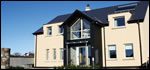
A new development at Grange Lough, Rosslare, reveals that passive houses can be made Irish – both in terms of what they’re built with, and how they look.

A new development at Grange Lough, Rosslare, reveals that passive houses can be made Irish – both in terms of what they’re built with, and how they look.
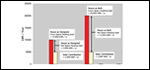
Few concepts in sustainable design have caught on like the passive house. Since the construction of the first passive house in Germany in 1990, an estimated 15 to 20,000 houses have been built to what is arguably the world’s leading low energy building standard. Drawing from his experience in sustainable building since the early 1980s, Bill Quigley of NuTech Renewables posits an alternative approach.
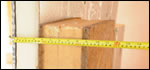
Sustainable architect Simon McGuinness describes a project in Dublin which is set to surpass the onerous standard using structural insulated panels.
In the hands of the right architect, meeting the passive house standard needn’t involve compromising on design. Construct Ireland visited a recently certified passive house which shows that a seamless low energy architecture is possible

Martin Murray, chairman of the Passive House Association of Ireland and founder of Martin Murray Architects, explains why the world’s leading energy efficiency standard is on the up in Ireland
While the principles of low energy building apply equally for new build and upgrades, the reality is that htting passive levels becomes much trickier when retrofitting. The Passive House Institute have taken this on board and created a retrofit standard that is ambitious but achievable.
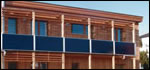
The Passive House standard, an internationally renowned approach to building that negates the need for conventional heating, has attracted considerable interest in Ireland recently as energy prices continue to rise. Vivienne Brophy, Dr Irena Kondratenko, Patxi Hernandez and Kevin Burke of UCD’s Energy Research Group look at the effect this approach could have on cutting Ireland’s energy consumption and CO2 emissions.
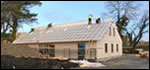
On Tuesday the 15th of March a passive house, a house that does not need to be heated, was built a few miles outside of Galway. The brain child of Lars Pettersson of Galway based Scandinavian Homes Ltd, it is believed to be the world’s first standardized and factory made passive house.
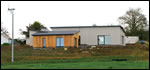
As interest in sustainable building continues to escalate, Construct Ireland is increasingly unearthing buildings that betray an ambition to break new ground under a plethora of green criteria. John Hearne visited one such house in County Louth, and found a project driven by passive house and BER scale-topping ambitions combined with on-site energy and water supply strategies and a commitment to the use of green materials
It could be a reflex response to the shockingly poor construction standards that came to define Ireland’s boom years, but the world’s leading low energy building standard is starting to thrive in Ireland. As the several case studies following this article reveal, a groundswell of Irish clients, designers, contractors and manufacturers are starting to recognise the opportunities available in becoming early adopters of a standard destined for exponential global growth.
Unipipe are specialist distributors of heat pumps, underfloor heating and renewable low-energy heating systems.