From the Construct Ireland archives


Welcome to the archive of Construct Ireland, the award-winning Irish green building magazine which spawned Passive House Plus. The feature articles in these archives span from 2003 to 2011, including case studies on hundreds of Irish sustainable buildings and dozens of investigative pieces on everything from green design and building methods, to the economic arguments for low energy construction. While these articles appeared in an Irish publication, the vast majority of the content is relevant to our new audience in the UK and further afield. That said, readers from some regions should take care when reading some of the design advice - lots of south facing glazing in New Zealand may not be the wisest choice, for instance. Dip in, and enjoy!

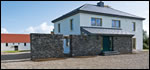
End result

0406-End-Result-SMALL.jpg
In light of the current economic conditions, an increasing number of Irish people are turning away from buying new homes, instead deciding to make the most of what they’ve got by extending and refurbishing. Lenny Antonelli visited one such house nearing completion in Glasnevin that uses a combination of materials and techniques to aim for highly sustainable results.

Group effort

0302-groupefforttitle.jpg
With the age of cheap and abundant fossil fuel energy coming to an end, district heating, where a development is heated from a single, centralised heat source is becoming an increasingly attractive option due to the capital and running cost, efficiency and environmental benefits it can offer. Paraic Davis of Davis Associates mechanical and electrical engineers explains why district heating has become a viable and increasingly popular choice in Ireland.

Renewable Energy Grants

Renewable Energy Grants
As oil prices surge and the need to rapidly switch to energy sources that are secure and environmentally friendly becomes increasingly apparent, more and more Irish people are tapping into the renewable energy resources at their disposal. But are the Government giving people the incentive to make the switch?

Air-tight case

How & why to achieve excellence in air-tightness
Air-tightness is a key factor in any low energy build, but is often overlooked in comparison to energy sources and insulation. Lenny Antonelli examines how air-tightness is achieved in buildings, from design stage down to the final sealing

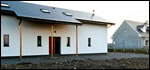
Log House Renovation

Log House Renovation
A log bungalow in rural Meath has been extended and given a total energy upgrade – and wood is at the heart of the renovation, with a timber frame extension and external insulation system along with a fresh log finish.
Words: Lenny Antonelli

Convergence

Tom Woolley, Professor of Architecture at Queens University Belfast and Editor of the Green Building Handbook, draws attention to the recent event which demonstrated the potential and importance of sustainable building in Ireland.

Passive assessment

Passive Assessment
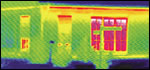
Built in 2004, Tomás O’Leary's house in Wicklow was the first in the country to be certified by the Passive House Institute — but how would it fare when subjected to a BER assessment six years later?

Electronic recycling

0203electitle.jpg
“Electrical waste is one of the fastest growing waste streams in Ireland. It is a source of valuable materials which can readily be recycled and which we must divert from landfill”, Minister Martin Cullen, 19 February 2003.

International Selection

International Selection
Since establishing UCD’s Energy Research Group in 1975, the career of Professor J Owen Lewis has taken in the role of principal at the UCD College of Engineering, Mathematical and Physical Sciences, a Bord na Móna R&D directorship and expert roles advising EU research, national energy policy and building regulations. Appointed CEO of SEAI last year, Professor Lewis has been a champion of sustainable building since before the term existed. His selection combines a proto-green Alvar Aalto design, the reimagined Reichstag and an unusual academic building with two new cutting edge sustainable buildings.

Critical mass

Critical Mass
Thermal mass can significantly influence a building’s space heating requirement – in some cases the effect is to increase it, and in others to reduce it. Leading energy consultant Ciaran King of Emerald Energy explains how this occurs, and by describing an assessment of the topic, provides some rules of thumb regarding when thermal mass may be beneficial, and when it may be detrimental.