

- Government
- Posted
Central Bank: Irish housing completions set to fall as housing crisis continues
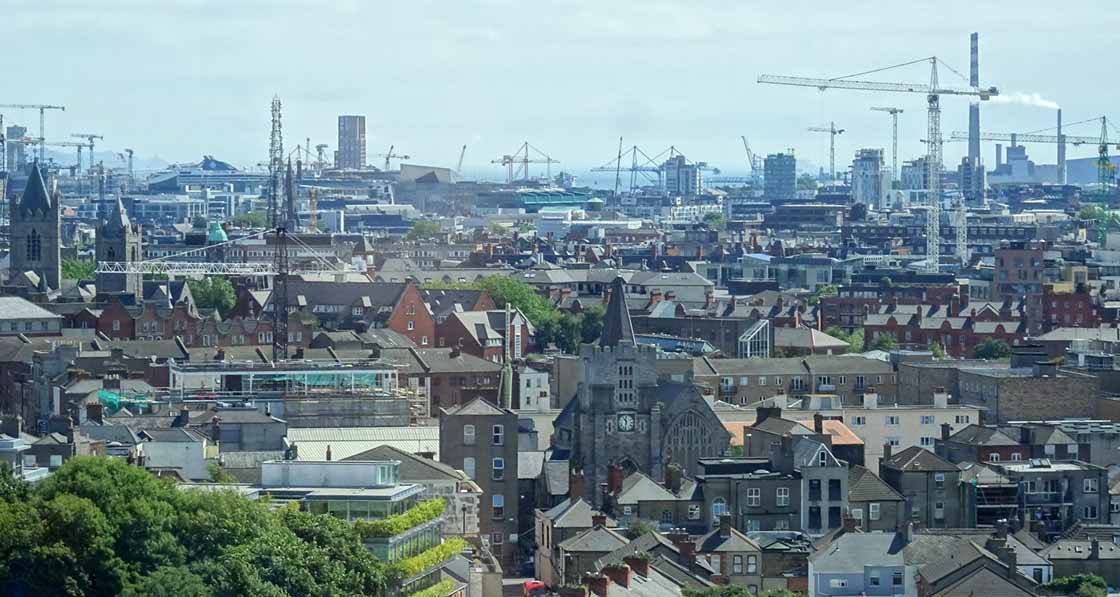
The Central Bank of Ireland has revised down its forecast for new home completions, cutting its 2026 projection from 40,000 to 39,500, with 1,000 fewer completions also expected in each of 2027 and 2028, now put at 41,000 and 45,000 respectively.
Want immediate access to all back issues of Passive House Plus and exclusive extra content? Click here to subscribe for as little as €20, or click here to receive the next issue free of charge
With the embodied carbon of construction estimated to take up 14 per cent of Ireland's emissions, one powerful way of cutting Ireland's emissions is to build less stuff. The new figures from the Central Bank suggest that in the housing sector at least, that's precisely what Ireland's doing.
The bank pointed not to energy costs or material shortages but to Ireland's planning system: homes completed so far this year took an average of four years from planning lodgement to completion, twice as long as a decade ago, with delays linked to infrastructure bottlenecks including water and electricity connections.
The bank also noted that Middle East-driven energy price rises have added to inflation this year but did not link this directly to the housing slowdown.
But Ireland is in a housing crisis, so only the most callous person would greet a drop in housing numbers with unbridled joy. The trick is: how to house as many people as possible, while putting as little CO2 into the atmosphere in the process — and ensuring low emissions across their life. In addition to accelerating ways of radically reducing the embodied carbon of new homes, that means getting behind adaptive reuse too.
Indeed, that 14 per cent figure may be past its sell-by date: it comes from a 2022 UCD/IGBC report. National embodied carbon totals fluctuate significantly based on construction activity. For instance, 90,000 homes were built in 2006 when the Celtic Tiger was ravaging Ireland's landscape, but just 4,575 units were added in 2013, which would invariably have led to an enormous drop in emissions from construction. Which just goes to show that when it comes to cutting embodied carbon, you can't beat a good recession.
Related items
-
 Kingspan fined €40 million by EU
 -
 Households feeling the heat of global oil conflict
 -
 New and enhanced Irish retrofit grants go live on 6 October
 -
 Campaigners tell Irish government to publish Climate Action Plan
 -
 Straw houses could help meet housing targets and cut emissions
 -
 Price regulation promised to address district heating affordability