From the Construct Ireland archives


Welcome to the archive of Construct Ireland, the award-winning Irish green building magazine which spawned Passive House Plus. The feature articles in these archives span from 2003 to 2011, including case studies on hundreds of Irish sustainable buildings and dozens of investigative pieces on everything from green design and building methods, to the economic arguments for low energy construction. While these articles appeared in an Irish publication, the vast majority of the content is relevant to our new audience in the UK and further afield. That said, readers from some regions should take care when reading some of the design advice - lots of south facing glazing in New Zealand may not be the wisest choice, for instance. Dip in, and enjoy!

Walking on water

0406-Walking-On-Water-SMALL.jpg
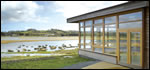
Designing a low-energy public building with passive ventilation and lighting in mind is one thing – making it fit seamlessly into a rural wetland environment is quite another. Lenny Antonelli visited the award-winning Ballybay Wetlands Centre in County Monaghan - a closed-panel timber frame structure designed to sit softly on the surrounding landscape.
Coillte Teoranta

0208coilltetitle.jpg
The building is the first all timber office complex in Ireland. It covers almost 2,300m2 of floor space and provides accommodation for almost 100 staff working in a wide range of forestry related disciplines.

Passive Resistance

0209passivetitle.jpg
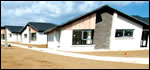
On Tuesday the 15th of March a passive house, a house that does not need to be heated, was built a few miles outside of Galway. The brain child of Lars Pettersson of Galway based Scandinavian Homes Ltd, it is believed to be the world’s first standardized and factory made passive house.

Taking Part

0310-TakingPartTITLE.jpg
Based on past form, the Department of the Environment officials could be forgiven for bracing themselves for a construction industry backlash in response to the proposed changes for Part L of the building regulations which aim to both improve energy efficiency and reduce carbon emissions by 40%, whilst also introducing mandatory renewable energy and air tightness requirements. Jeff Colley outlines why, for reasons of self interest alone it’s very much in the industry’s interests to embrace the new regulations rather than attempt to resist change.

Home Truths

0309-hometruthstitle.jpg
Patrick Daly, co-founder of the RiSE (Research in Sustainable Environments) research unit in the DIT has undertaken an in depth study and critique of the current Irish Part L for energy efficiency in dwellings, comparing it in detail to the UK equivalent. The findings raise challenging questions about the Irish standards and methodology and highlight serious shortcomings in comparison to our UK neighbours, permitting substantially higher levels of CO2 emissions from new homes in Ireland than in the UK.

Green giant

Bank of America Tower, to be located at One Bryant Park in midtown Manhattan is a US$1 billion project that has been designed to be one of the most highly efficient and ecologically friendly tall buildings in the world. The building, currently under construction, is expected to be complete in 2008.

Jason Walsh got in touch with Cook + Fox Architects in New York, designers of the Bank of America Tower to see how the practice plans to square the circle of designing an environmentally sound high-rise building.

Modern Age

0309-modernagetitle.jpg
Creating the right comfort in buildings for elderly people involves ensuring a warm internal environment, which typically results in high energy consumption. John Hearne visited the new Castle Gardens Retirement Village as it approached completion and found a project that combines complimentary low energy technologies, materials and design to deliver high levels of comfort whilst also keeping running costs, energy consumption and carbon emissions low

Acquired taste

Acquired-Taste
The Department of Agriculture’s new Food Safety Centre is a deceptively simple building that combines natural ventilation and lighting with energy efficiency - all on a designed natural landscape that seeks to both boost biodiversity and prevent flooding. Lenny Antonelli visited the County Kildare site to find out more

Hollow victory

Hollow Victory
Much of the housing built around Dublin over the last forty years has been built of single-leaf nine-inch hollow block construction – which are both notoriously energy inefficient and extremely difficult to insulate effectively without causing damp problems. Lenny Antonelli visited a hollow block house which has been ecologically renovated to protect occupant health whilst shooting to the top of the energy rating scale.

Vorsprung durch Oeko-technik

German eco house combines breathability and stunning airtightness
Germany has a reputation for high quality craftsmanship, an attention to detail and a positive attitude to sustainable and healthy housing. Jason Walsh visited a new German-built house in County Dublin to see if the expertise can be exported.