Rosslare passive scheme
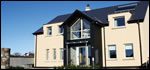
A new development at Grange Lough, Rosslare, reveals that passive houses can be made Irish – both in terms of what they’re built with, and how they look.

Welcome to the archive of Construct Ireland, the award-winning Irish green building magazine which spawned Passive House Plus.
The feature articles in these archives span from 2003 to 2011, including case studies on hundreds of Irish sustainable buildings and dozens of investigative pieces on everything from green design and building methods, to the economic arguments for low energy construction.
While these articles appeared in an Irish publication, the vast majority of the content is relevant to our new audience in the UK and further afield. That said, readers from some regions should take care when reading some of the design advice - lots of south facing glazing in New Zealand may not be the wisest choice, for instance.
Dip in, and enjoy!
A new development at Grange Lough, Rosslare, reveals that passive houses can be made Irish – both in terms of what they’re built with, and how they look.
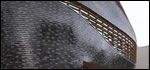
Completed in October 2006 the headquarters of the Netherlands chapter of the World Wide Fund for Nature (WWF) is nothing if not a striking building. It also happens to be one of the single most sustainable buildings created in recent years. Construct Ireland continues its series of examining internationally significant sustainable buildings, with Jason Walsh putting questions to the building's architects, Amsterdam-based RAU.

Martin Murray, chairman of the Passive House Association of Ireland and founder of Martin Murray Architects, explains why the world’s leading energy efficiency standard is on the up in Ireland
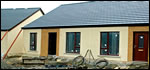
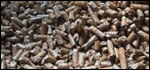
Many of the opportunities that trees offer for sustainable building are harnessed by a housing development in Ballymahon, Co. Longford which combines timber frame construction with recycled newspaper insulation and wood pellet heating. Adding in solar panels and attention to detail for airtightness, these low energy, low carbon homes reveal a developer who sees a bright future in going green. John Hearne visited the site to find out more.
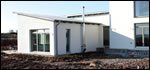
Mixing excellent thermal performance with renewable heating, efforts to boost biodiversity and plans for micro-generation, a new timber frame house in rural Cork shows that both appealing design and low environmental impact can be achieved with one-off rural housing.
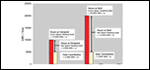
Few concepts in sustainable design have caught on like the passive house. Since the construction of the first passive house in Germany in 1990, an estimated 15 to 20,000 houses have been built to what is arguably the world’s leading low energy building standard. Drawing from his experience in sustainable building since the early 1980s, Bill Quigley of NuTech Renewables posits an alternative approach.

When designing and building high density apartment and housing developments, the attention, so often lacking, to acoustic performance, can have a critical impact on the quality of life of the buildings’ inhabitants, as leading acoustic consultant Jim Dunne, Managing Director of Integrated Acoustic Solutions explains

‘Interest in sustainable construction, both from private sector individuals and businesses and from the public sector has grown rapidly in the last couple of years. Unfortunately the ability of the industry to respond to this interest is under developed’ – Tom Woolley.
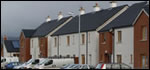
Ever since the seminal Agenda 21 was endorsed by 150 nations including Ireland in 1992, increasing lip service has been paid to sustainable development in everything from government policy to manufacturers’ claims. However, as John Hearne describes, in Tralee Town Council’s Rath Oraigh housing development, local action has been taken with not only local, but global benefits that embody the principles of sustainable development.