Warning
  • JUser: :_load: Unable to load user with ID: 457

From the Construct Ireland archives


Welcome to the archive of Construct Ireland, the award-winning Irish green building magazine which spawned Passive House Plus. The feature articles in these archives span from 2003 to 2011, including case studies on hundreds of Irish sustainable buildings and dozens of investigative pieces on everything from green design and building methods, to the economic arguments for low energy construction. While these articles appeared in an Irish publication, the vast majority of the content is relevant to our new audience in the UK and further afield. That said, readers from some regions should take care when reading some of the design advice - lots of south facing glazing in New Zealand may not be the wisest choice, for instance. Dip in, and enjoy!

Oil and The Irish Economy

0210douthwaitetitle.jpg
In terms of 1972 money, oil prices averaged about six dollars a barrel between 1987 and 2000. Last October they reached $40. They are now around $50 a barrel which means that they are beginning to climb back into the territory which caused the global economy to crash in 1979/80.
Move on up

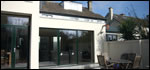
Low energy upgrade options in two Dublin homes
High energy prices and growing public eco awareness is leading to a situation where people are giving existing homes energy upgrades on an unprecedented scale. Two recently renovated houses in Dublin are at the extremes of how even the most difficult existing dwellings can be made greener, as Jason Walsh reveals.

Athenry passive house

Athenry
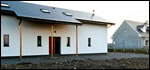
Staggeringly airtight ecological home in Athenry set to meet the Passive House Institute standard

Occupied Territory

John Hearne explains how truly low energy buildings can succeed or fail depending on how they engage with their occupants.

Safe as Houses

0305-energyefficienthousepricestitle.jpg
Conventional wisdom dictates that higher construction costs — for instance to reduce energy consumption and carbon emissions — would either squeeze developers’ profit margins or increase house prices. Tom Dunne, Head of DIT’s School of Real Estate and Construction Economics, reveals how misguided this view could be...

Does old mean cold?

Balancing conservation and energy conservation in historic buildings
Historic buildings are all too easy to ignore when considering potential candidates for energy upgrade work. The heritage value of an historic building can often mitigate against the most obvious interventions, such as adding some form of wall insulation or replacing windows. Architect Fergal McGirl takes a typical Georgian building in Dublin through the energy rating process and proposes some considered upgrade measures. 

Navan Credit Union

Architect Paul Leech explains why the new Navan Credit Union is arguably Ireland’s most innovative sustainable building to date, and outlines his hopes that the experience gained from this project can help the construction industry to realise sustainable building in Ireland.

Breaking the mould - part V

In this fifth & final article in the series, Joseph Little compares simulations of several internal insulation options on common wall types, with worrying conclusions.

Squaring the Circle

O310-SquaringTheCircleTITLE.jpg
Atop a hill in New Ross, County Wexford, is a beacon for sustainability in large-scale developments, which draws extensively from across the palette of sustainable building options to achieve a building that is notable not just aesthetically, but also in health, energy and environmental impact terms. Jason Walsh visited the new Solar Croi spa, part of the Brandon House Hotel, Health Club and Spa, to find out more.

Opinion

0502-Opinion-SMALL.jpg
Ambitious companies in the Irish sustainable building sector should look to the US, says Century Homes founder Gerry McCaughey. As chief executive of LA-based green building business consultancy Infineco, McCaughey is witnessing first-hand how the land of opportunity is waking up to green construction.