Mixed Signals
As it nears completion, John Hearne visits what is anticipated to be one of the lowest energy buildings in Ireland's recent history.

Welcome to the archive of Construct Ireland, the award-winning Irish green building magazine which spawned Passive House Plus.
The feature articles in these archives span from 2003 to 2011, including case studies on hundreds of Irish sustainable buildings and dozens of investigative pieces on everything from green design and building methods, to the economic arguments for low energy construction.
While these articles appeared in an Irish publication, the vast majority of the content is relevant to our new audience in the UK and further afield. That said, readers from some regions should take care when reading some of the design advice - lots of south facing glazing in New Zealand may not be the wisest choice, for instance.
Dip in, and enjoy!
As it nears completion, John Hearne visits what is anticipated to be one of the lowest energy buildings in Ireland's recent history.
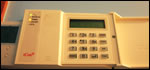
Buildings that are designed or refurbished to use little energy all too often fail to deliver the expected performance, if the building occupants aren’t able to use the building as intended. John Hearne reveals the crucial role that user-friendly heating controls play in ensuring that a theoretically low energy building delivers the expected results.
Until recently the York Street flats had been a living legacy of failed past approaches to social housing – a slum of mainly north-facing flats dating from Victorian times, and poorly rebuilt in the year Ireland became a republic, 1949. John Hearne visited the recently redeveloped York Street and found a thoroughly sustainable set of buildings that should inspire thoughts of future progress rather than past failings.
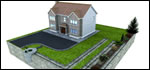
Construct Ireland’s John Hearne discovers the growing shift towards making sites independent in terms of both water supply and wastewater treatment.
Commercial, industrial and institutional buildings use a great deal of energy to ensure the comfort of the occupants and the efficient operation of their businesses. Building Energy Management Systems (BEMS) enable building owners to use this energy efficiently, as Sustainable Energy Ireland’s Chris Hughes explains

Set in the shadow of Macgillycuddy's Reeks, Killorglin, County Kerry is a dramatic and rugged location best known as a tourist destination and home to Puck Fair. It’s also home, however, to one of Ireland’s most successful companies, FEXCO, which has opened its new low-energy corporate headquarters in the town.

Designing sustainable buildings doesn’t always mean hi-tech solutions. From green roofs to living walls to constructed wetlands, sometimes it’s just a matter of embracing natural solutions. Lenny Antonelli investigates the emerging technologies and designs that use nature to improve the performance of buildings.
In September, Sustainable Energy Ireland launched a major energy efficient housing development in Tuam, Co Galway. Houses in the development are over 70% more energy efficient than houses built to standard Building Regulations requirements. Construct Ireland’s John Hearne describes.
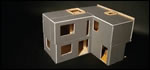
Nottingham passive house enters Solar Decathlon
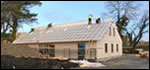
On Tuesday the 15th of March a passive house, a house that does not need to be heated, was built a few miles outside of Galway. The brain child of Lars Pettersson of Galway based Scandinavian Homes Ltd, it is believed to be the world’s first standardized and factory made passive house.